
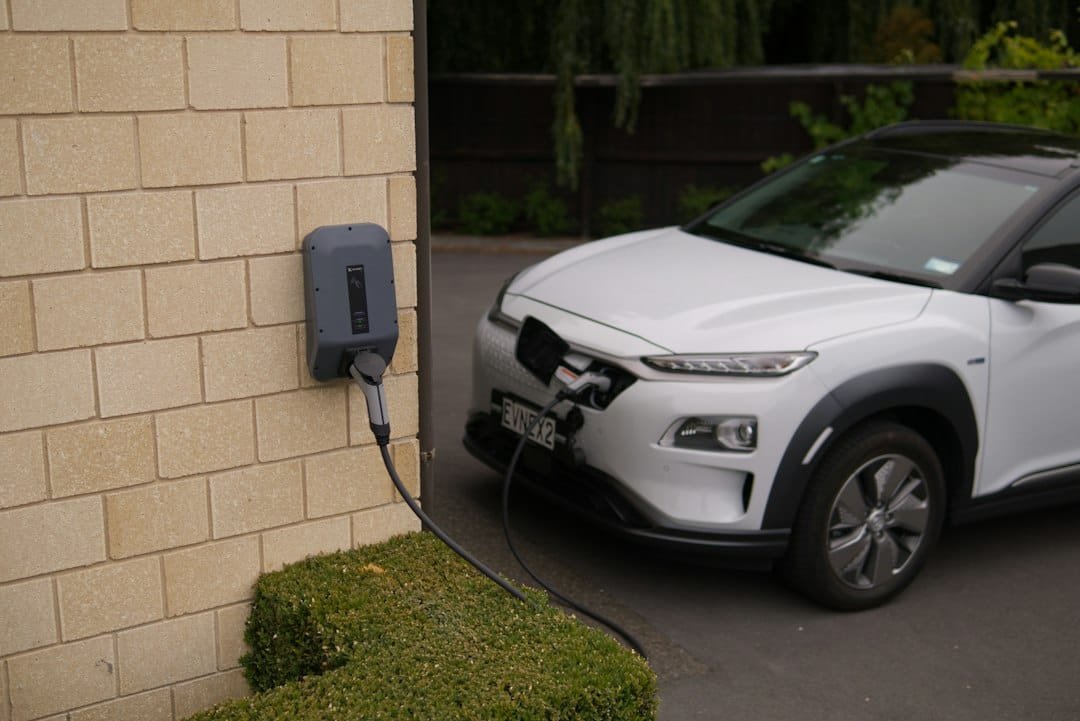
Home EV charging is one of the largest flexible electrical loads in a modern household. Many vehicles can wait until cheaper hours to charge, but a timer does not tell you whether the home’s electrical system can safely carry the load. A useful smart-charging setup makes four separate decisions: where charging equipment can be installed, how much current can safely be supplied, how much energy the driver needs before departure, and whether the utility price changes by time.
Quick answer: start with your weekly driving pattern and the vehicle’s documented charging limits. Check whether an existing approved Level 1 connection meets your needs before paying for Level 2. If installing 240-volt equipment, have a qualified electrician assess service and circuit capacity, applicable electrical codes, permits and correct charging hardware. Use one authoritative charging schedule in the vehicle or certified charging equipment, set a departure-ready override, and measure whether moving energy off-peak actually reduces the bill. For a constrained service, consider an approved load-management system rather than attempting to switch EV charging with a generic smart plug.
Editorial scope: U.S.-first household planning for homeowners, renters and small property managers. This is not a vehicle or EVSE buying ranking, a wiring tutorial, a permit interpretation, or an installation specification. Rates, circuit requirements, building permissions and equipment features vary by region. This Guide is a documentation-based decision framework, not a report of WesternTechy physically installing, inspecting or testing EV charging equipment. Research checked October 22, 2026.
Start with actual driving and parking—not maximum charger power
| Household question | What to record | Why it changes the plan |
|---|---|---|
| Where does the vehicle park overnight? | Private garage, driveway, assigned outdoor bay, shared parking or no reliable home parking. | A physically accessible charging position and safe cable route matter before the charger specifications. |
| How much energy is needed before departure? | Typical miles or kWh replenished per day, expected plug-in and departure times. | A modest commute may be covered by a slow, safe Level 1 session. |
| What does the car support? | Vehicle’s maximum AC charging power, connector compatibility, scheduled-charge settings. | The car’s onboard charger can limit the rate even if the wall equipment advertises more. |
| What does the building support? | Electrical-service and branch-circuit assessment by a qualified electrician; permitted mounting location. | Unused breaker spaces and “spare power” are not the same thing. |
| Which electricity price applies? | Actual utility tariff, seasonal peak windows, EV-specific rates, and fixed or demand charges where applicable. | Off-peak savings exist only under a tariff that actually rewards shifting. |
| Who owns the account and equipment? | Vehicle owner, property owner, utility account holder and charging-app administrator. | Important in rentals, condominium parking and shared charging. |
The U.S. Department of Energy Alternative Fuels Data Center notes that many drivers can meet their needs with overnight Level 1 charging if a suitable dedicated branch circuit is available. Faster Level 2 charging is useful for longer commutes, larger batteries or short overnight windows, but buying the highest-power EVSE does not automatically increase the car’s supported AC charge rate.
Level 1 versus Level 2: a household planning comparison
| Factor | Level 1 | Level 2 |
|---|---|---|
| Nominal U.S. supply | 120 V AC through manufacturer-approved charging equipment. | 240 V AC residential equipment, with a suitable professionally evaluated circuit. |
| Typical purpose | Modest overnight energy replenishment and plug-in hybrid charging. | Faster replenishment for longer commutes, larger EV batteries or shorter dwell times. |
| Approximate driving range gained | DOE/ENERGY STAR describes roughly 2–5 miles for an hour of charging. | Typical estimates commonly span about 10–30 miles per charging hour, varying substantially by power and vehicle. |
| Electrical requirements | Do not assume an arbitrary garage receptacle is safe for continuous charging; assess the required circuit and receptacle condition. | Appropriate conductor, breaker, outlet/hardwire configuration, ground-fault protection and permits under the adopted code. |
| Best first step | Check the actual outlet, manufacturer’s cord set and required dedicated circuit. | Get a site assessment and installation estimate from a qualified electrician. |
The speed figures are rough educational ranges, not a promise for a specific vehicle. Charging varies with onboard charging capability, battery condition, efficiency, temperature, losses and equipment settings. See DOE charging level definitions and ENERGY STAR’s charger guidance.
Circuit capacity: why a software slider is not a wiring upgrade
Home EV charging is treated as a continuous load by the National Electrical Code. The charging current, branch circuit, installation method and equipment rating must be coordinated by a qualified installer to the locally adopted code. A common example is 32 A continuous charging on a properly designed 40 A circuit. That 80% relationship is a planning illustration—not permission to change a circuit breaker, replace a receptacle or configure charging current without assessing the complete installation.
At a nominal 240 V, 32 A corresponds to approximately 7.7 kW before charging losses and vehicle limits. A 24 A setting corresponds to about 5.8 kW, and a 40 A setting to about 9.6 kW. The actual EVSE limit must never exceed the approved circuit/equipment configuration. DOE’s home charging guide references NEC Article 625 and professional assessment; DOE managed charging guidance distinguishes a charging schedule from equipment and grid capacity constraints.
- Do not use a general smart plug to interrupt EV charging. Consumer smart-plug current ratings and software automation are not substitutes for listed EVSE protection and control.
- Do not rely on extension cords, adapters or power strips unless the vehicle/EVSE manufacturer and applicable installation rules explicitly permit the exact configuration. Treat a normal household outlet as unverified until assessed.
- Do not increase the EVSE current setting because the dashboard says the circuit has unused capacity. Hardware/circuit configuration governs the safe ceiling.
- Use qualified electrical work and permits where required. A breaker label, installation photo or an app cannot substitute for an appropriate load calculation.
- Inspect the physical route: parking position, outdoor rating if applicable, cable strain, trip hazards, wheel impact and accessibility.
Three different kinds of ‘smart’ charging
| Control type | What it actually does | What it does not guarantee |
|---|---|---|
| Time scheduling | Starts or permits a charging session within defined hours or for a target departure time. | Does not verify electrical service capacity or prevent coincident loads. |
| Current limiting and dynamic load management | Approved equipment may lower EV charging current based on measured building or circuit loads. | Not the same as a universal right to skip service work or permitting. |
| Utility demand response / managed charging | A utility program or supported platform may request/coordinate charge times or power according to agreed program rules. | Not equivalent to every vehicle’s built-in schedule; program consent, control and payment differ. |
| Bi-directional charging | Specialized compatible vehicle/charger/site systems may send energy outward for supported uses. | Not a standard feature of every vehicle with a charging port, not an implicit backup generator. |
For households, the least complex supported option is often a vehicle’s own departure or charging schedule. Some connected EVSE units can also schedule sessions and report delivered energy. A utility’s managed program may add another control layer. DOE’s managed EV charging overview explains that basic scheduling is static, while networked charge management can respond to changing loads, rates or operating needs. Its examples concern fleet settings; residential support is product- and utility-specific.
Choose one authoritative schedule
If both the car and charging station have independent timers, a conflict can be hard to spot: the EVSE allows power at midnight while the car’s internal schedule waits for 2 a.m., or each interface reports “waiting” for the other. Identify the primary owner of charging permission and define the subordinate equipment’s behavior according to manufacturer instructions. Keep the ability to make a documented departure-ready override in the supported vehicle or EVSE app.
| Situation | Preferred decision path | Verify after configuration |
|---|---|---|
| Car already supports reliable departure scheduling | Use the vehicle’s built-in supported controls first when they meet the tariff and driving need. | Real charge begins and finishes as expected, not just a timer icon. |
| Car has no useful scheduler but connected EVSE does | Use the EVSE’s supported schedule if compatible with the vehicle and installation. | The charger reports the intended session and never exceeds configured electrical limits. |
| Utility offers a managed-charging reward | Read terms, consent, override rules, data collection and supported vehicles/EVSE. | Which application has priority; when utility control can be overridden. |
| Multiple cars share limited charging capacity | Discuss listed shared-circuit or load-management equipment with an installer. | Each vehicle gets sufficient energy by departure without exceeding rated equipment. |
| A local automation platform also sees the charger | Treat it as a monitoring layer until an officially supported control path and safe failure state are documented. | Loss of Wi-Fi, hub or cloud does not defeat essential EVSE safety functions. |
Build an off-peak plan from the actual utility bill
Before creating schedules, verify whether the property has a time-of-use (TOU) tariff, a flat residential rate or an EV-specific tariff. Some programs require an enrollment or a separately eligible meter. Tariffs also differ by season, weekday/weekend and holiday. A lower overnight rate is not universal, and a promotional utility incentive may have constraints or reporting requirements.
Illustrative calculation: suppose the household needs 25 kWh from the wall and its actual tariff is $0.30/kWh peak versus $0.12/kWh off-peak. Charging that same wall energy entirely in those respective windows would cost $7.50 versus $3.00, a $4.50 difference. This arithmetic ignores additional charges, demand impacts, taxes, loss of incentives and any differences in delivered energy. It does not predict a particular utility bill.
A different calculation asks whether the energy fits the window. At a nominal 7.68 kW AC input, 25 kWh / 7.68 kW is about 3.3 hours of ideal charging time. Actual charging can take longer because of vehicle charging limits, battery management, losses, temperature, tapering and interruptions. Use the EV’s supported estimate and validate one real overnight session before depending on a narrow schedule. Do not postpone necessary charging merely to match a hypothetical cheaper rate.
If an off-peak period begins at a sharp boundary, not every charger must be programmed for the exact same minute. DOE research identifies concentrated timer-start behavior as a potential load peak; a compatible managed-charging system can stagger sessions where supported. Our Time-of-Use Electricity Guide covers the broader household tariff decision; this article focuses on EV charging-specific implementation and checks.
Load management: when capacity, not the clock, is the constraint
A home may have a large evening load from a heat pump, cooking range, water heater and other equipment. A simple charger schedule could shift the EV into an off-peak period but still coincide with another major load. Dynamic load management is a separate architecture: supported monitoring and certified charging controls reduce or defer EV charging current as house demand changes. Such systems can sometimes avoid or defer expensive upgrades where approved by the electrician and local authority. They do not make unsafe wiring safe, and not every EVSE supports them.
Our Smart Electrical Panels & Load Management Guide explains the difference between monitoring, circuit control and service-capacity management. Use that Guide when the question concerns the whole home’s loads. For EV charging, ask the installer to document the equipment’s rated current, the source of load measurements, control priority during communication failure, whether code-approved load sharing applies, and who can alter the current limit.
- Local load-managed EVSE: can the system constrain charging even without home Wi-Fi or a remote cloud service? Verify the manufacturer’s documented fallback.
- Solar and battery households: distinguish solar-aware charging from permitted backup/export operation. The EV’s battery does not automatically back up the home.
- Two-EV homes: a shared total amp limit must be enforced by compatible listed equipment, not parallel timers that assume both cars will never arrive together.
- Future vehicle changes: a replacement EV may have different AC charging acceptance and connector compatibility, requiring schedule updates or compatible accessories.
- Commissioning responsibility: the qualified installer should validate the load-management configuration and any required inspection before normal use.
Installation questions to ask a qualified electrician
| Ask before buying the equipment | What a usable answer should establish |
|---|---|
| Does the home’s service have adequate capacity? | A documented assessment, not merely “there is space for a breaker.” |
| What circuit and maximum charging current are appropriate? | The correct locally compliant combination of conductors, overcurrent protection, EVSE settings and installation method. |
| Hardwired or receptacle-based installation? | A product- and code-appropriate decision addressing connections, protective devices, maintenance and future service. |
| What approvals are required? | Applicable permits, property approvals, local inspection and utility notification if necessary. |
| Would approved load management change the plan? | Which specific system is supported, its failure behavior and whether the authority accepts it. |
| What happens after power or internet returns? | Documented safe restart, manual controls and what charger/vehicle settings persist. |
| What is the total installed cost? | Charging equipment, permitted electrical work, potential service work, mounting/cable protection, taxes and maintenance. |
For a residence, DOE recommends employing certified charging hardware and a qualified electrical contractor. Outdoor installations need suitable outdoor-rated equipment, and the wall unit/cable must be protected from vehicle contact and trip hazards. The ENERGY STAR EVSE program requires third-party safety certification for participating models; check the exact model, manufacturer and applicable listing instead of accepting an unverified logo. Don’t treat this Guide as instructions for wiring a receptacle or service panel.
Renters, condos and shared parking: permissions before equipment
Renter-friendly does not mean “plug a high-load charger anywhere.” Before spending money on a portable EVSE, identify who owns the outlet and electrical supply, whether charging is permitted, which meter pays for the electricity, and whether the parking space is assigned. An ordinary garage receptacle might feed other loads or be controlled by a building. Charging through unapproved shared outlets can create safety and billing issues.
EV charging rights and installation obligations vary by state and property type. The DOE multifamily charging resource hub covers different approaches for residents and owners; its California residential renter policy entry and Colorado policy entry demonstrate that the relevant rules are jurisdiction-specific. Do not assume a blanket national right to install new wiring or make permanent changes to shared property.
- Get written authorization: clarify installation responsibility, electrical contractor, local permits, insurance if required, and equipment ownership.
- Document billing: decide whether a separate meter, approved EVSE usage record or flat fee is appropriate and legally permitted.
- Consider accessible parking and cable routes: the charging cable should not obstruct pedestrians or accessible travel paths.
- Plan handover: define who removes or retains the charging equipment, and how network accounts and user access are revoked.
- Use alternatives where home charging is unavailable: workplace, designated shared charging and public infrastructure may be better than a makeshift outlet arrangement.
A seven-test commissioning and reliability checklist
| Test | How to verify it | Pass result |
|---|---|---|
| 1. Electrical sign-off | Record the electrician’s approved circuit/EVSE current and applicable inspection where required. | Equipment configuration matches documented installation. |
| 2. Normal manual session | Plug in through approved equipment without a schedule and use permitted vehicle controls. | Vehicle reports expected safe charging state. |
| 3. Off-peak schedule | Enable the chosen single scheduler and observe a real overnight session. | Starts, stops and delivers enough energy by departure. |
| 4. Limit/managed power | With installer/vendor support, verify permitted lower current or load-management operation. | Reported charge rate remains within commissioned limits. |
| 5. Loss of internet / app | Review manufacturer’s supported offline behavior without defeating network safety or critical household connectivity. | Basic EVSE safeguards do not depend on a nonessential home automation. |
| 6. Departure override | Test the documented manual charge-now procedure at a safe time. | Household can request necessary energy without silently bypassing the hardware safety configuration. |
| 7. Power recovery and records | Use an ordinary supported restart or review a natural post-outage event; do not create dangerous electrical faults. | Safe reconnect behavior and scheduling persist or are restored intentionally. |
Test one actual session from plug-in to departure-ready status. A dashboard with the words “charging scheduled” is not sufficient evidence. Record start time, finish time, energy reported by the vehicle/EVSE, relevant tariff window and any interruption. The app energy figure may differ from the utility meter because measurement locations and charging losses differ. Our Whole-Home vs Circuit-Level Monitoring Guide explains these boundaries.
Common failures and the correct first response
| Observed symptom | Start with | Avoid |
|---|---|---|
| Connected, but not charging | Confirm the car’s charge limit, EVSE status, both possible schedulers and authorized utility controls. | Resetting the entire home router or assuming the circuit is faulty. |
| Charging began outside off-peak hours | Check tariff season/weekday logic, vehicle timezone, both app schedules and any charge-now override. | Hard-disconnecting power with a generic smart plug. |
| Session slower than expected | Verify vehicle AC input ceiling, supported EVSE current limit, battery temperature, power-sharing and losses. | Increasing the equipment setting beyond the commissioned electrical capacity. |
| Circuit breaker trips, outlet gets unusually hot or burning smell | Stop using the equipment and contact a qualified electrician or emergency service as appropriate. | Repeating charging, changing breaker size or ignoring overheating. |
| Cloud app disconnects | Confirm whether the EVSE can still deliver an approved basic charge and retain safety settings. | Treating loss of app telemetry as permission to bypass charging safeguards. |
| Utility program pauses a session | Check enrollment terms and documented override mechanism, if permitted. | Circumventing controls without reading the program agreement. |
Cost worksheet: check savings without inventing a utility tariff
| Field | Household value to fill in |
|---|---|
| Vehicle and EVSE model | ________________________ |
| Typical wall energy to replenish | ________ kWh per day or session |
| Home arrival and departure | ________ to ________ |
| Actual off-peak window and season | ________ to ________ |
| Peak price / off-peak price | $________ /kWh; $________ /kWh |
| Approved maximum charging current | ________ A, documented by installer or equipment |
| Vehicle maximum AC input | ________ kW, from owner manual |
| Primary schedule owner | Vehicle / EVSE / utility-managed program |
| Safety and reliability exceptions | ________________________ |
| Date one real session was verified | ________________________ |
A calculation is useful only after identifying the tariff and the real energy need. Under flat electricity pricing, shifting unchanged kWh alone may save nothing. Under a dynamic tariff, the cost difference depends on actual time-varying prices, losses, program terms, and other charges. Do not assume electric vehicles create “free” electricity through solar, batteries or bidirectional charging. If the system claims backup-power capability, verify the exact vehicle, EVSE, transfer equipment, interconnection and permits with qualified professionals.
Related WesternTechy Guides and tools
- Smart Home Energy & Cost hub — measurements, budgeting and demand-response context.
- Time-of-Use Electricity & Smart Homes — tariff-based scheduling across household loads.
- Smart Electrical Panels & Load Management — service, circuits and capacity constraints.
- Whole-Home vs Circuit-Level Monitoring — interpreting house, circuit and device energy.
- Smart Home Cost & Budget Calculator — keep upfront and recurring costs distinct.
- Renters & Apartments hub — permissions and reversible installation principles.
Official references and editorial method
Reviewed October 22, 2026. Primary materials: U.S. Department of Energy — Charging Electric Vehicles at Home; DOE — Charging Equipment Types; ENERGY STAR — Electric Vehicle Chargers; ENERGY STAR — EVSE Connected and Safety Criteria; DOE — Managed EV Charging; DOE — Multifamily Charging; DOE — Evaluating Utility Rates. Numeric examples are illustrative calculations, not tested vehicle performance, site electrical approval or promises of savings. This Guide is not legal or electrical installation advice; local code, utility rules and the equipment manufacturers control the actual implementation.